
Decking care: oiling, cleaning and winter
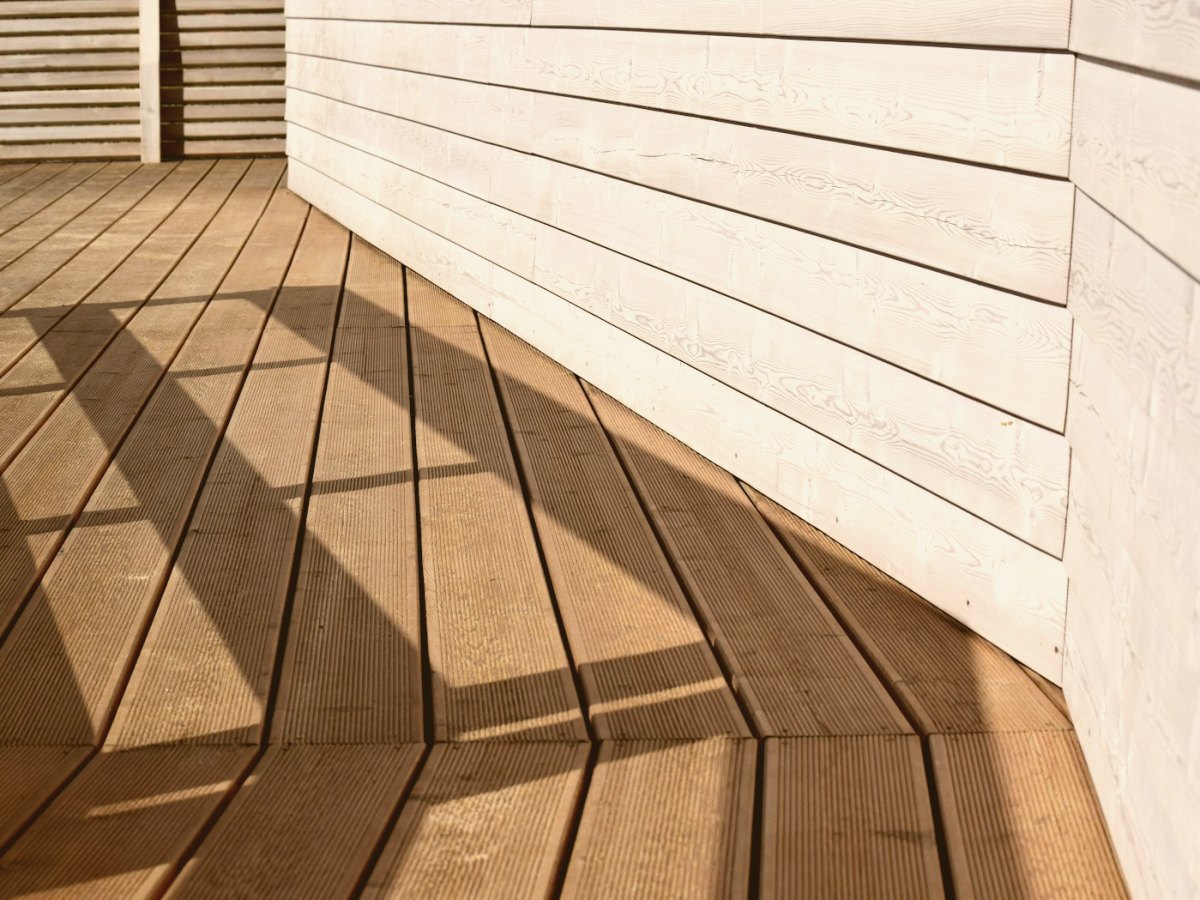
A timber deck needs a simple routine: oil it soon after installation, clean it every spring and re-oil every 1–2 seasons, or as soon as water stops beading on the surface. The key is that water drains off the boards and air can move underneath. Below is everything step by step: oiling, cleaning, moss and greying, winter and when to replace a board.
First oiling after installation
Untreated wood outdoors quickly soaks up moisture and dirt, so apply the first protective coat in the same season the deck is built. The boards must be clean and dry, with no rain forecast for at least a day; avoid very hot weather and direct midday sun.
- Use a dedicated decking oil or an exterior wood protector.
- Apply a thin coat along the grain and wipe off the excess after 15–20 minutes.
- Two coats are usual; treat board ends and cuts with extra care, as they absorb the most water.
How often to re-oil
In a sunny, exposed spot or where there is a lot of foot traffic, re-oil every year; in shade with light use, every second season. A simple test: pour a little water on a board. If it beads, the protection still works; if it soaks in and the wood darkens, it is time to oil.
| When | What to do |
|---|---|
| Spring | clean, check screws and boards, oil if needed |
| Summer | sweep, clear leaves from gaps, wash as needed |
| Autumn | remove leaves, clean the gaps, move pots and mats |
| Winter | clear snow with a plastic shovel, no salt |
Cleaning
Sweep the deck regularly and wash it with water and a soft brush along the grain; use a deck cleaner for heavier dirt. Use a pressure washer with care: low pressure, a wide nozzle and some distance, otherwise it tears the surface fibres and leaves the wood rough. Let the deck dry completely before oiling.
Moss, algae and greying
In sunlight untreated wood slowly turns silver-grey. This is a natural surface process and does not in itself weaken the board. To bring back the wood colour, clean the surface with a wood brightener and then oil it. Green moss and algae appear in shady, damp spots: remove them, cut back plants so the deck dries faster and check that water is not being trapped.
Gaps and drainage
Leave gaps of a few millimetres between boards so water drains and the wood can expand. Leaves, sand and pine needles in the gaps hold water, so clear them regularly with a thin scraper or brush. Do not leave plant pots or mats on the boards for long; raise pots on feet so moisture does not collect beneath.
Winter: snow and salt
- Clear snow with a plastic shovel rather than a metal one, so the surface is not scratched.
- Do not use de-icing salt: it damages the wood, the finish and metal fixings. Sand is better for grip.
- Avoid piling large heaps of snow on the deck that take weeks to melt in spring.
Ventilation and substructure
A deck lasts as long as what lies beneath it. Use pressure-impregnated beams or antiseptic-treated boards and beams for the joists; the difference is explained in fresh-sawn, antiseptic or pressure-treated timber. Do not lay joists directly on soil but on supports, put geotextile and gravel underneath and leave the sides partly open so air can circulate.
When to replace a board
Walk the deck every spring and push an awl into any suspect spots. If the wood is soft, crumbles or the board is cracked right through, replace it; a screwed board can be removed on its own without taking up the whole deck. Tighten loose screws and replace rusty ones.
Our decking boards
We make pine and spruce decking with a milled surface ourselves in Latvia, in 35x95 and 35x145 mm, lengths 3.0, 3.6, 4.2 and 4.8 m. The current price per m² is shown in the calculator on the decking boards page, and we deliver with our own truck in Riga and the surrounding area (delivery). More tips in useful articles.
FAQ
When should a new deck be oiled?
In the same season, in dry weather, once the boards are clean and dry.
How often should decking be oiled?
Every year in full sun, every second season in shade; check with the water drop test.
Can I use a pressure washer?
Yes, but on low pressure, with a wide nozzle and along the grain.
Can I put salt on a deck in winter?
No, salt damages the wood and fixings; use sand instead.
Why does decking turn grey?
UV light changes the surface layer of the wood; it can be cleaned and oiled again.